Loyalty Is Not a Points Program
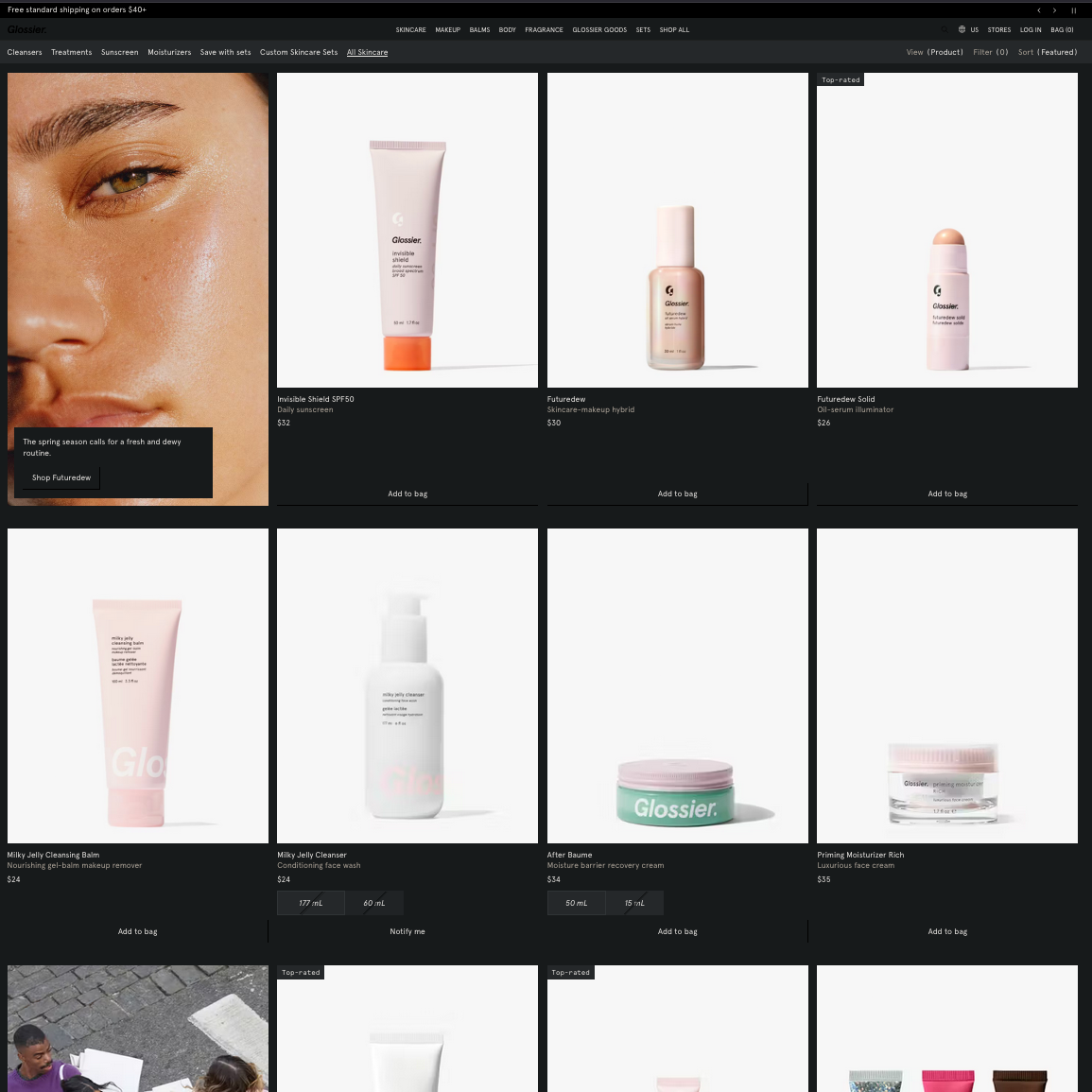
Glossier was built on a blog. It started as a community of readers who found each other through shared taste. This was the community that formed the initial customer base for Glossier. They provided research on what products to make and made customers into participants. Then Glossier took on investors and had to focus on growth, which meant focusing on measurable outcomes. How do you measure an extra dollar invested in the community against a dollar of paid advertising? The legibility of other forms of spending sidelined the community. Glossier slowly pivoted to a standard retail experience and became a brand like any other. When I visit the skincare section today, I see a grid of products.
I am left to my own devices to figure out what would work for me.
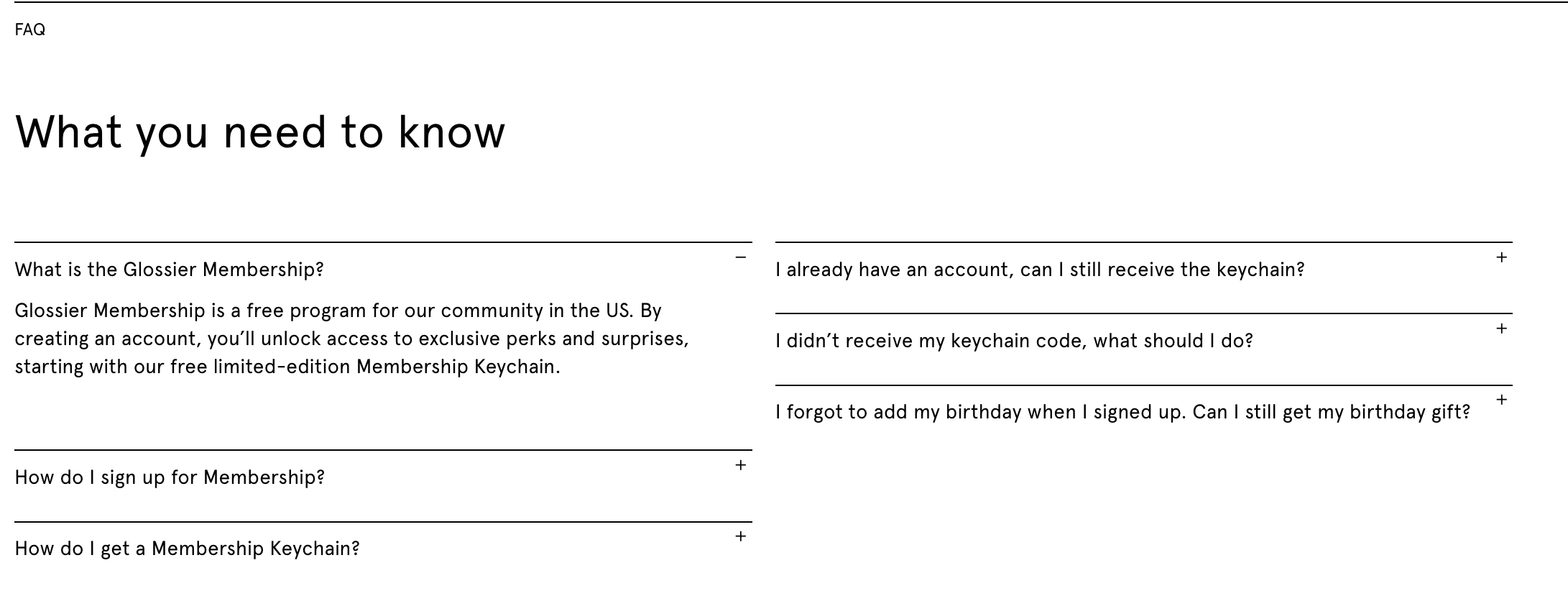
Glossier has a loyalty program, but it is nowhere to be found on the homepage. When you do eventually find it, you see this explanation of the benefits:
The FAQ mentions a free keychain in four of the six questions. This is what Glossier believes membership and loyalty is built on.
Most loyalty programs are designed to create lock-in. You accumulate points. Points convert to discounts. If you leave, you lose your points. The implicit logic is that leaving is so expensive that you stay. So, you’re not being loyal. You’re just stuck because you are falling prey to high switching costs. The most exotic loyalty programme (beyond airline credit cards) is the “buy 10 X get 1 X free”. This is simply asking you to keep doing what you are doing to give you a bonus. If the reward is just free stuff then a customer feels no desire to input more into the program. Think about how many incomplete punch cards you have from coffee shops. These programs do not do anything beyond a free coffee. So your customers will not put anything into your product. There is no reason to be invested.
The question I keep asking myself is how it is possible to do something more with loyalty programs that goes beyond expanding consumption and actually creates a connection to the product. But another requirement for me is that the programme does not maintain the siloed consumption patterns we are all stuck in. A interwoven community where members know each other defends itself. When your customers are invested in each other, they become invested in the ecosystem.
So is there a way to create a community on top of a product? In many ways the maker movement is exactly that: people bond over ESP32 projects and helping each other out. That community emerged over a shared set of interests. Could something like that be designed and built and feel real?
The community can solve your platform problems
My starting point is that every problem a platform faces can be re-framed as an opportunity for community-driven solutions. Consider recommendations. Right now I can search, read blogs, watch YouTube reviews, or consult Reddit. But what if the ecosystem itself provided the place for these recommendations?
Let us go back to Glossier. Consider what else that members page could hold. A member posts a request describing their skin and what has not worked. Another member with a track record answers. The answer is visible to everyone who comes after with the same problem.
This sounds fun in practice but this is a very under-specified protocol. What is a track record in this context? How can you make sure someone does not spam the system? How is this building community and connection? In order for this to work we need to zoom out and realize that we have to build a complete economy to sustain this.
So, let us create “skin in the game”. Let’s create a synthetic currency, call it SKN. There are two types of SKN: social and solo. Solo SKN is your classic loyalty point. Social SKN are points that can be earned by contributing to the community. They represent your standing in the community. Akin to Karma on Reddit. However, we are creating an economy, so this social SKN can be used to buy unique things in the ecosystem. They’re not just bragging rights they can help unlock features in the ecosystem. We do not have to specify those right now but just remember we can make Social SKN valuable. So now we have a currency that members want to earn.
For Social SKN to work we will keep track of the amount earned through positive behaviors and debit any losses from “errors”. At any time you can use your social SKN to unlock perks. Those expenditures do not deplete your lifetime earnings but they do lower your “social SKN current account”. Lifetime earnings track standing. The current account is what you can spend.
Return to the recommendation problem. The track record for a user is their lifetime net earned Social SKN. If they want to recommend something we have to make it cost something. A responder stakes some of their current Social SKN balance on the recommendation. If it holds up, they get the stake back with a bonus. If it does not, they lose it. This is a variation on the lockbox protocol. If the recommendation is helpful (verified by the requester, or by outcomes the platform can observe), the responder earns back their stake plus a bonus. If it is low effort or unhelpful, they lose what they staked.
One thing falls out of this immediately: community becomes a legible component of an ecosystem. In Glossier’s case, the community contribution was easy to ignore. With explicit cooperative protocols the ecosystem can actually make community contributions visible. Now we have a ledger of who contributed, what they staked, and whether it held up. Now the community’s value can be directly optimized.
Ansible Architecture designs incentive systems and interaction protocols for platforms and marketplaces.